The Doman Method for Autism: Hope, Structure, and the Need for Scientific Caution
 Many parents of children with autism, ADHD-like symptoms, speech delay, or developmental delays search for approaches that offer hope beyond routine therapy. One such approach is the Doman Method, popularised through programs and books such as Answering Autism: The Doman Method® Plan for Autism, ADD and Neurodevelopmental Delays.
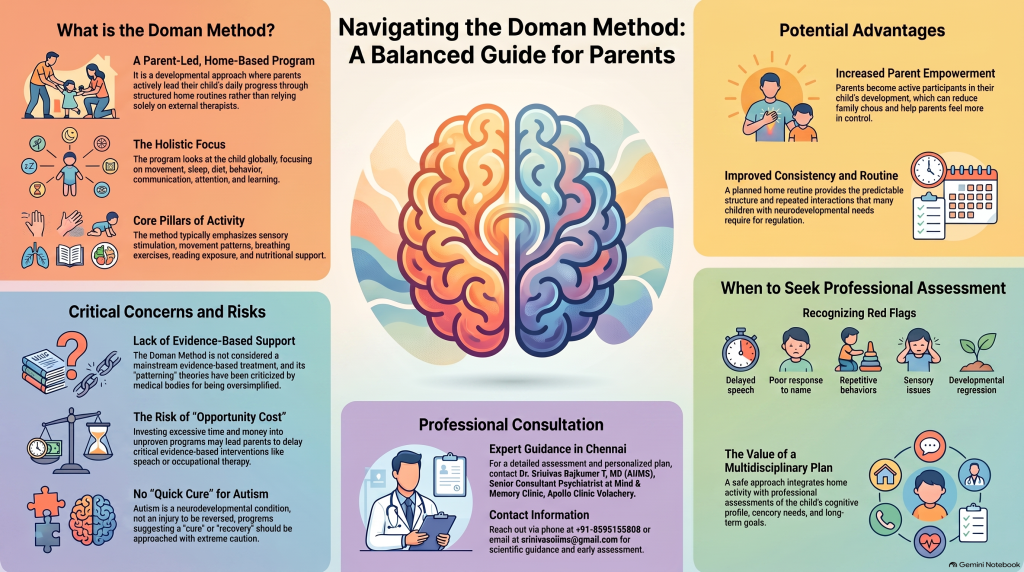
The Doman Method is a parent-led, home-based developmental program. It usually emphasises sensory stimulation, physical activity, movement patterns, breathing exercises, nutrition, reading exposure, and structured daily routines. Its central message is attractive to many families: parents are not passive observers; they can actively participate in their child’s development every day.
Possible Advantages
The biggest strength of such an approach is parent involvement. Children with autism benefit when parents understand development, communication, sensory needs, and daily structure. A planned home routine can improve consistency, reduce chaos, and make parents feel more empowered.
The method also encourages families to look at the child globally — movement, sleep, diet, behaviour, communication, attention, and learning — rather than focusing only on one symptom. This holistic thinking can sometimes help families become more observant and proactive.
For some children, structured play, physical activity, sensory engagement, predictable routines, and repeated parent-child interaction may support better engagement and regulation. These elements overlap partly with broader developmental principles used in many accepted therapies.
Major Concerns
The main concern is that the Doman Method is not considered a mainstream evidence-based autism treatment. Its historical roots include “patterning” theories of brain development, which have been criticised by medical bodies for being oversimplified and insufficiently supported by scientific evidence.
Another concern is the risk of false hope. Autism is a neurodevelopmental condition, not a simple injury that can be “reversed” by one method. Any program that indirectly suggests cure, dramatic recovery, or replacement of professional therapy must be approached carefully.
A third issue is opportunity cost. If parents spend too much time, money, and emotional energy on unproven programs, they may delay interventions that have stronger clinical support — such as speech and language therapy, occupational therapy, parent-mediated communication training, structured behavioural/developmental interventions, special education support, and treatment of associated conditions like ADHD, sleep problems, anxiety, epilepsy, or intellectual disability.
A Balanced View
Parents should not be discouraged from being active participants in their child’s progress. Home-based work is valuable. But the safest approach is to combine parental involvement with a proper multidisciplinary plan.
The Doman Method may be viewed as a source of structured home activity ideas, but it should not replace assessment by qualified professionals or evidence-based intervention. In autism care, the goal is not to “fix” the child, but to understand the child’s developmental profile and help them communicate, learn, regulate emotions, build independence, and participate meaningfully in family, school, and community life.
When to Seek Professional Help
Parents should seek professional assessment if a child has delayed speech, poor response to name, reduced eye contact, repetitive behaviours, sensory issues, poor social reciprocity, unusual play, extreme rigidity, hyperactivity, sleep problems, or developmental regression.
A good autism care plan should be individualised. It should consider the child’s language level, cognitive profile, sensory needs, attention span, behaviour, sleep, school functioning, family stress, and long-term developmental goals.
For a detailed assessment and personalised treatment plan, you may consult:
Dr. Srinivas Rajkumar T, MD (AIIMS, New Delhi), DNB, MBA
Senior Consultant Psychiatrist
Mind & Memory Clinic, Apollo Clinic Velachery, Chennai
Opp. Phoenix Mall, Chennai
📞 +91-8595155808
✉️ srinivasaiims@gmail.com
Early assessment, scientific guidance, and parent empowerment together give the child the best chance of progress.