How to Make a Marriage Last Forever
 Marriage is one of the most ambitious human projects. Two individuals with different histories, personalities, and expectations attempt to build a shared life that may span decades. Many marriages survive. Some thrive. Others slowly dissolve.
The natural question people ask is simple:
What allows some marriages to last a lifetime while others fail?
Psychology, neuroscience, and long-term relationship studies provide surprisingly clear answers. Successful marriages are rarely the result of luck alone. Instead, they are sustained through patterns of behavior that protect emotional safety, trust, and mutual respect over time.
Marriage Is Not Sustained by Love Alone
Romantic culture often emphasizes passion as the foundation of marriage. But research shows that passion alone rarely sustains long-term relationships.
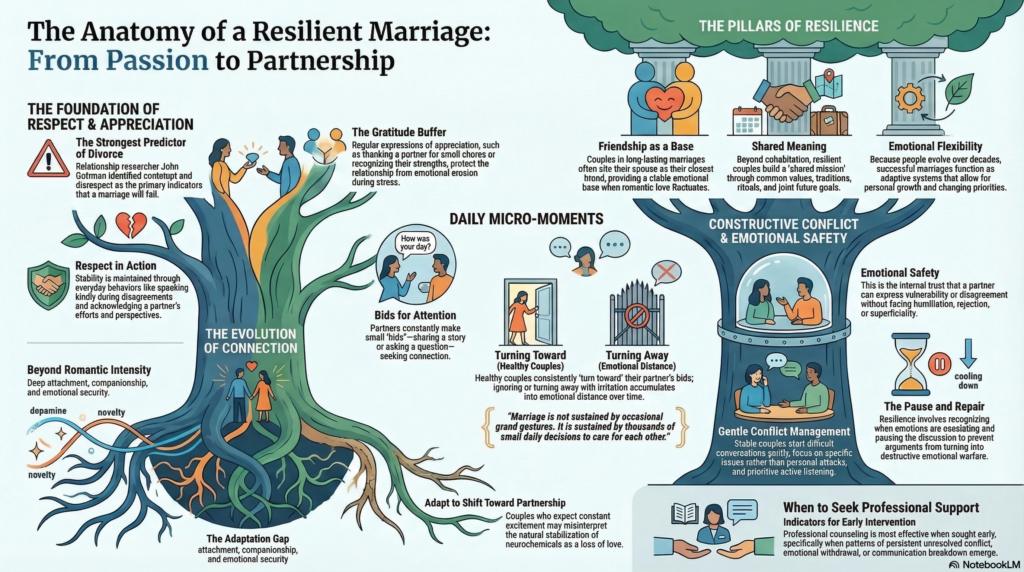
Early romantic attraction is driven largely by dopamine and novelty. Over time, these neurochemical surges stabilize. What replaces them is something deeper:
attachment, companionship, and emotional security.
Long-lasting marriages transition from romantic intensity to emotional partnership.
Couples who understand this shift adapt well. Couples who expect constant excitement may misinterpret normal changes as loss of love.
Respect Is the Foundation of Long-Term Marriage
Among all predictors of relationship stability, mutual respect stands out as the most important.
Respect manifests in everyday interactions:
-
speaking kindly even during disagreement
-
acknowledging the partner’s efforts
-
valuing each other’s perspectives
-
avoiding humiliation or contempt
Relationship researcher John Gottman found that contempt and disrespect are the strongest predictors of divorce.
The opposite is also true.
Couples who consistently show admiration and respect are far more likely to maintain long-term marital stability.
Successful Couples Turn Toward Each Other
In daily life, partners constantly make small bids for attention.
Examples include:
-
sharing a story about their day
-
asking a casual question
-
expressing excitement about something
Partners can respond in three ways:
-
turning toward the partner
-
ignoring the bid
-
turning away with irritation
Healthy couples usually turn toward each other. These micro-moments of connection accumulate over time and strengthen emotional intimacy.
It is rarely the grand romantic gestures that sustain marriages. It is the small daily acknowledgments of each other’s presence.
Healthy Couples Manage Conflict Constructively
All marriages contain conflict. Differences in personality, finances, parenting styles, and life priorities inevitably emerge.
The difference between stable and unstable marriages lies in how conflict is handled.
Healthy couples tend to:
-
start difficult conversations gently
-
focus on the issue rather than attacking the partner
-
listen actively before responding
-
attempt to repair tension quickly
They also recognize when emotions are escalating and pause discussions before arguments become destructive.
Conflict in healthy marriages becomes problem solving, not emotional warfare.
Emotional Safety Is Essential
For a marriage to last decades, partners must feel emotionally safe.
Emotional safety means:
-
feeling heard and understood
-
being able to express vulnerability
-
trusting that disagreements will not lead to humiliation or rejection
Without emotional safety, partners gradually withdraw from one another. Conversations become superficial, and emotional intimacy disappears.
Maintaining emotional safety requires patience, empathy, and consistent effort.
Appreciation Prevents Relationship Decay
One subtle threat to long-term relationships is taking the partner for granted.
When couples first meet, appreciation is abundant. Over time, routine replaces novelty and expressions of gratitude decline.
However, research suggests that regular expressions of appreciation protect relationships from emotional erosion.
Examples include:
-
thanking the partner for small efforts
-
acknowledging their strengths
-
recognizing sacrifices made for the relationship
Gratitude acts as an emotional buffer during stressful periods.
Shared Meaning Strengthens Marriage
Long-lasting couples often develop a sense of shared meaning.
This includes:
-
common values
-
shared traditions
-
joint goals for the future
-
family rituals and celebrations
Shared meaning transforms marriage from simply living together into building a life together.
Couples who feel they are partners in a shared mission are more resilient during difficult periods.
Emotional Flexibility Is Crucial
People evolve across the lifespan. Careers change, health fluctuates, children grow up, and priorities shift.
Marriages that last decades are not rigid structures. They are adaptive systems.
Successful couples allow space for personal growth while maintaining emotional connection.
They remain curious about each other even after many years.
Friendship Is the Hidden Strength of Marriage
One of the most overlooked aspects of long-lasting marriages is friendship.
Couples who remain emotionally close often describe their spouse as their closest friend.
Friendship includes:
-
enjoying each other’s company
-
sharing humor
-
feeling comfortable together
-
supporting each other during stress
Romantic love may fluctuate, but friendship provides a stable emotional base.
When Couples Should Seek Help
Even strong marriages experience periods of strain.
Professional counseling may be beneficial when couples experience:
-
persistent unresolved conflicts
-
emotional withdrawal
-
communication breakdown
-
loss of trust or respect
Early intervention is far more effective than waiting until resentment becomes entrenched.
A Realistic Perspective on “Forever”
No relationship can be guaranteed to last forever. Human lives are complex and unpredictable.
However, research consistently shows that marriages are far more likely to endure when couples prioritize:
-
respect
-
emotional responsiveness
-
appreciation
-
constructive conflict resolution
-
shared meaning and companionship
Marriage is not sustained by occasional grand gestures.
It is sustained by thousands of small daily decisions to care for each other.
Final Reflection
A long-lasting marriage is not a perfect relationship. It is a resilient one.
Partners who remain curious about each other, communicate with respect, repair conflicts quickly, and maintain emotional connection often discover that love evolves into something deeper than passion—a stable partnership built on trust, understanding, and shared life experiences.
In that sense, lasting marriages are less about finding the perfect person and more about learning the art of growing together.
Dr. Srinivas Rajkumar T, MD (AIIMS, New Delhi), DNB, MBA (BITS,Pilani)
Consultant Psychiatrist & Neurofeedback Specialist
Mind & Memory Clinic, Apollo Clinic Velachery (Opp. Phoenix Mall)
✉ srinivasaiims@gmail.com 📞 +91-8595155808